



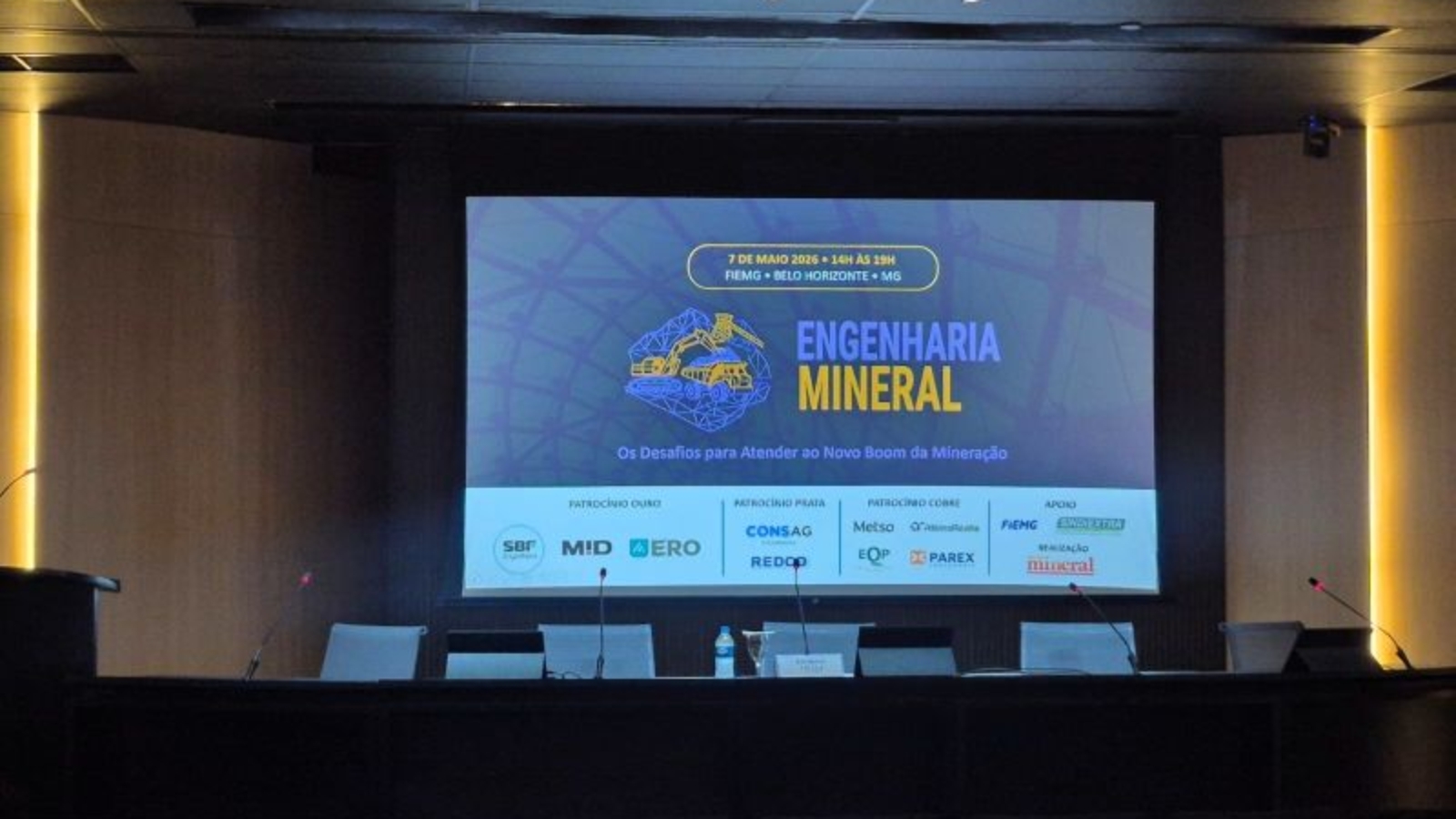
We atteended the today´s seminar “Mineral Engineering” organized by @brasilmineral and held today at FIEMG in Belo Horizonte. Sharing some insights for the community:
– The Engineering sector and service providers are investing and preparing to support the Brazilian mineral sector’s “boom” in the coming years (according to IBRAM – Instituto Brasileiro de Mineração, US$76.9 billion in investments are expected by 2030).
– It is evident that engineering projects are becoming increasingly complex to meet the demands of sustainability and risk management, among other factors; there is a clear shift from the profile of past decades where projects aimed for scale and now need to focus on operational safety and sustainability.
– In general, there is a consensus that the mineral sector as a whole is much more structured and aware of the importance of risk management above all other KPIs, from the embryonic and conceptual phases.
– The incorporation of new technologies or the consolidation of already widespread practices such as BIM aims to increase reliability and reduce the risks associated with projects.
– Management practices such as HAZOP regain their strategic significance in the final phases of projects and give a holistic character to project management.
– It is no longer about maximizing efficiency. Instead of isolated silos, the focus is on optimizing integrated systems and relational networks within projects; integrating platforms are being created that bring together engineering companies, operators, and public bodies.
– It is clear that the engineering sector already incorporates sustainability concepts into projects from their initial phases, and actions (and costs) for some themes are considered at the outset of projects; among these themes are mine closure and mitigation resulting from climate change.
– With the increasing complexity of engineering projects, the imbalance and “trade-off” between CAPEX and OPEX become even more significant for the safe implementation of projects; the increased complexity in the conception of the project cannot lead to a transfer of CAPEX to OPEX, which increases the risks of failures in future implementation and operation.
– At the same time that the engineering sector generates increasingly complex projects, there is a trend for future demand to be more fragmented, focused on smaller projects of critical minerals with less margin; this fact puts pressure on engineering companies that need to adjust to this new context in the demand of the mineral area.
– The great challenge pointed out by the participants in the debates does not lie in the incorporation of technologies, but in the training of teams and cultural transformation aimed at the correct application of new technologies;
– Field staff are transitioning from simply executing well-defined tasks to interpreting and making data-driven decisions; a new leadership profile is essential.
Add a Comment